
 Join
Join
 Shorts



Flipkart Big Billion Day sale India में e-commerce industry का सबसे बड़ा धमाका बन चुका है। हर साल इस sale में लाखों users participate करते हैं, लाखों products बिकते हैं और हजारों करोड़ों रूपये का business generate होता है। लेकिन सवाल ये है — इतने सालों में अब तक कुल कितने products बिके? और कितनी रकम स्टॉक की गई है? इस blog में हम historic data, trends, estimates और industry context के साथ यही पता लगाने की कोशिश करेंगे।
Big Billion Day: A Quick History
Flipkart ने पहली बार 2014 में “Big Billion Day” नामक single-day sale launch किया था। उस दिन उन्होंने reportedly **US$100 million** (लगभग ₹600+ करोड़ उस समय की विनिमय दर पर) की sales 10 घंटे में की थी। :contentReference[oaicite:0]{index=0}
उसके बाद यह event evolve हुआ और multi-day sale format अपनाया गया। अब इसे “Big Billion Days” कहा जाता है, जो 4–7 दिन या कभी-कभी 10 दिनों तक चलता है। :contentReference[oaicite:1]{index=1}
CoreSight की wrap-up report के अनुसार, Big Billion Days 2024 edition में Flipkart ने कुछ records तोड़े हैं, और platform analytics ने भी insights साझा की हैं। :contentReference[oaicite:2]{index=2}

Key Metrics We Look For Flipkart Big Billion Day
जब हम “कुल products sold” और “कुल amount sold” की बात करते हैं, तो हमें ये metrics चाहिए होते हैं:
- Gross Merchandise Value (GMV): Sale की कुल कीमत (discounts और returns से पहले)
- Net Revenue / GMV after returns: Adjusted for cancellations, refunds
- Units Sold: कितने items बिके (products count)
- Customer Visits / Transactions: कितने orders, unique visitors
इनमें से Flipkart आमतौर पर **GMV और visitor metrics** share करता है, जबकि “units sold” (products count) पर कम सार्वजनिक विवरण मिलता है।
Recent Figures & Estimates Flipkart Big Billion Day
2024 Edition
CoreSight की report कहती है कि Flipkart Big Billion Days 2024 edition ने मजबूत performance दी। :contentReference[oaicite:3]{index=3}
कुछ significant numbers जो सामने आए हैं:
- Millions of orders processed across categories (electronics, fashion, home, etc.) :contentReference[oaicite:4]{index=4}
- 33 crore customer visits during the 2024 sale period :contentReference[oaicite:5]{index=5}
- Increase in premium mobile sales by ~70% in that sale period (compared to prior) :contentReference[oaicite:6]{index=6}
- Flipkart’s “largest ever” sale contributed significantly to Walmart’s Q3 growth, showing the scale of GMV impact :contentReference[oaicite:7]{index=7}
Although Flipkart did not publicly disclose the exact total units sold across all categories for 2024, analysts estimate the GMV for Big Billion Days and linked festive period to cross **₹1 lakh crore** for the broader e-commerce industry, with Flipkart commanding a large share of that. :contentReference[oaicite:8]{index=8}
2025 Season (Preliminary Numbers)
For 2025, Flipkart has made projections and early indicators:
- Flipkart expects **250–300 million unique visitors** during the Big Billion Days event and over **350 million** visits across the larger festival period. :contentReference[oaicite:9]{index=9}
- Media reports suggest that in one earlier statement, Flipkart “logs double-digit growth in topline” in recent Big Billion Days editions. :contentReference[oaicite:10]{index=10}
- Some news sources mention that the Big Billion Days 2024 sale saw over **₹20,000 crores** or more in single sale weeks as benchmark. :contentReference[oaicite:11]{index=11}
These figures indicate scale, but they do not give a reliable count of total units sold year-on-year. We can, however, infer growth trends and scale based on GMV and traffic.
Historic Benchmarks & Records
To understand the growth trajectory, let’s look at past benchmarks:
- 2014: $100 million in sales in 10 hours (first Big Billion Day) :contentReference[oaicite:12]{index=12}
- 2015: Flipkart reported $300 million GMV during Big Billion Days multi-day event :contentReference[oaicite:13]{index=13}
- In earlier editions, Flipkart announced that more than half a million products were sold within one hour of the sale beginning. :contentReference[oaicite:14]{index=14}
- 2022: Flipkart reported ~70% growth in premium mobile sales during Big Billion sale compared to prior year. :contentReference[oaicite:15]{index=15}
These milestones show how aggressive growth has been, both in sales value and consumer adoption.

Growth Drivers Behind These Numbers
Flipkart’s ability to scale Big Billion Days to such massive levels owes to multiple enabling factors:
Strong Supply Chain & Fulfillment Network
Flipkart now has over 100 fulfillment centers and numerous micro-fulfillment hubs to support heavy volumes. :contentReference[oaicite:16]{index=16}
Tier-2 / Tier-3 City Engagement
Demand from smaller cities has surged, contributing significantly to uplift in volumes. :contentReference[oaicite:17]{index=17}
Discounts & Financial Incentives
Bank offers, no-cost EMIs, and partner-brand discounts help push high-tier purchases. :contentReference[oaicite:18]{index=18}
Marketing & FOMO Strategy
Flipkart masters urgency, limited-time deals, influencer marketing, and countdowns to drive traffic spikes. :contentReference[oaicite:19]{index=19}
Tech & Data Analytics
Real-time pricing intelligence, demand forecasting, dynamic discounts help maximize conversions. :contentReference[oaicite:20]{index=20}
Estimation of “Total Products Sold” – A Reasoned Approach
Since Flipkart rarely discloses the exact number of units (products) sold across all categories, we must rely on estimates combining known GMV, average ticket sizes, and historical unit-hour data.
Example: In 2015, Flipkart claimed selling over 0.5 million products within first hour. :contentReference[oaicite:21]{index=21}
If in a typical Big Billion event, Flipkart achieves a GMV of ₹20,000 crore (just for illustration), and assuming average selling price per item is ₹2,500, then units sold would approximate 8 million items. Of course, categories differ widely (mobiles vs stationery vs FMCG), so average price fluctuates.
Thus, conservative estimate across multiple years might place total units sold over **tens to hundreds of millions** cumulatively. But without official data, these remain educated guesses.
Impacts & Signals from the Data
From traffic, growth numbers, and GMV trends, we can draw implications:
Flipkart’s Big Billion Day is now a major revenue driver inside Walmart’s global financials.
Moneycontrol
+1
The platform is scaling in both value and premium categories, not just bargain items.
Business Standard
+2
42 Signals
+2
The sale influences Q3 / Q4 financial timing and revenue recognition, meaning Flipkart’s scheduling of BBD has strategic impact.
Moneycontrol
Advertising revenue from Flipkart’s ecosystem has grown strongly, indicating that the Big Billion Days also fuel ad monetization.
The Times of India
+1
Challenges in Accurate Disclosure
Even though public interest is high, Flipkart and many e-commerce platforms hesitate to disclose unit-level sales because:
- It reveals margin pressure — high volume often comes with thin margins.
- Units sold data can be manipulated via bundling or low-value items.
- Competitive risk — revealing product-mix insights to rivals.
- Return / refund adjustments — net unit count is messy.
Looking Ahead: What to Expect in Future Editions
Given trajectory, here’s what future Big Billion Days editions may bring:
Flipkart may begin revealing units sold publicly for transparency and PR advantage.
GMV might cross ₹2–3 lakh crore over multi-day festival span (through continued inflation, category expansion).
Newer growth in verticals: grocery, pharma, quick commerce, fashion resale — pushing units sold further.
Real-time dashboards for live product-units data during sale (for public view).
Use of AI for demand surge control, preventing site crashes and improving conversion.
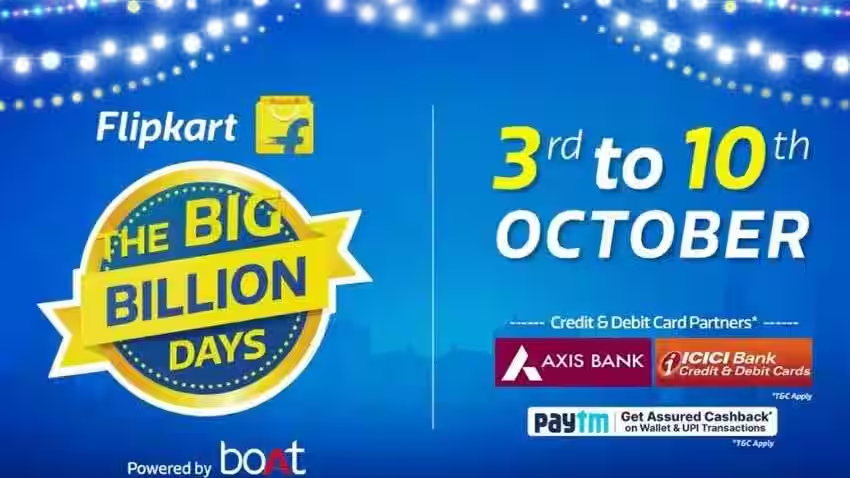
Conclusion – Flipkart Big Billion Day
तो क्या अब तक Flipkart ने Flipkart Big Billion Day में *कुल कितने products* बेचे और *कितनी राशि* generate की, इसका एक fixed public number नहीं है। लेकिन through credible sources and historical benchmarks, we know it’s enormous — spanning billions of visits, tens of thousands crores in GMV, and millions of products transacted. The trends clearly show massive upward growth year after year.
Flipkart Big Billion Day अब सिर्फ sale event नहीं है — यह Indian e-commerce ecosystem की pulse बन चुका है। हर edition में platform scale, category diversity और transactional complexity बढ़ रही है। भविष्य में, चाहिये हम units sold जानें या GMV records तोड़ें — यह sale सिर्फ trajectory बना रही है, legacy नहीं।
FAQs – Flipkart Big Billion Day
Q1: Flipkart ने कभी publicly total units sold बताया है?
A1: Rarely. एक उदाहरण है कि उन्होंने पहले कहा कि half a million products sold within first hour in some edition. :contentReference[oaicite:26]{index=26}
Q2: आज तक सबसे हाई GMV कौन सा BBD edition था?
A2: 2024 / 2025 editions are widely projected to generate record GMV crossing ₹1 lakh crore in festive e-commerce space. :contentReference[oaicite:27]{index=27}
Q3: Why Flipkart doesn’t always disclose units sold?
A3: Because of margin sensitivity, returns, bundling effects, and competitive risk.
Q4: How reliable are the estimates of units sold?
A4: They depend on average selling price assumptions and GMV disclosures, so they provide a ballpark, not exact number.
Q5: Will Flipkart begin revealing units sold going forward?
A5: It’s possible — especially with investor pressure and public demand for transparency — but no official commitment yet.
Read More :- AI Writing Assistants vs Human Teachers 2025: Who Benefits Students More?
Read More :- AI-Generated Mock Interviews for UPSC/SSC Aspirants: How Effective Are They?